Discover how antenatal education, pregnancy exercise, pelvic floor muscle training, and perineal massage can help you prepare for a smoother, positive birth and how a women’s health physiotherapist can help.
—
Table of Contents
ToggleLearn About Birth
As your baby develops, your body will go through many physical changes. Knowing what to expect from these changes throughout the different stages of pregnancy can have a positive influence on your physical health during pregnancy and during the birthing process. Studies show that women who attend antenatal education report higher satisfaction and less stress during and after birth (Johnson et al., 2022). Learning about vaginal and caesarean births, pelvic floor health, and possible birth-related injuries helps you make informed decisions and feel more confident.
A women’s health physiotherapist is uniquely qualified to guide you through your body’s physical changes, help you prepare your body for labour, and suggest strategies to make the experience more comfortable.
—
Keep Moving During Pregnancy
Staying active is safe and beneficial for both you and your baby. Exercise can help prevent excessive weight gain, preterm birth, gestational diabetes, preeclampsia, birth complications, and postpartum depression (Melzer et al., 2010).
If you were already active before pregnancy, you can usually continue your routine. Your physio can help you determine what aspects of your exercise routine is appropriate to continue or how to adjust your routine to maintain the same level of fitness while still maintaining a healthy pregnancy. If you were not as active prior to becoming pregnant, it is never too late to start! Your physiotherapist can help determine your current level of fitness and help tailor an exercise routine that is safe for you and baby and help you prepare your body for the
pregnancy journey.
A women’s health physio can also help you move around any pain or discomfort that may arise at any stage of pregnancy. From low back pain to pelvic pain, they can assist with manual techniques, exercises, positioning, and appropriate bracing for support.
—
Pelvic Floor Training & Perineal Massage
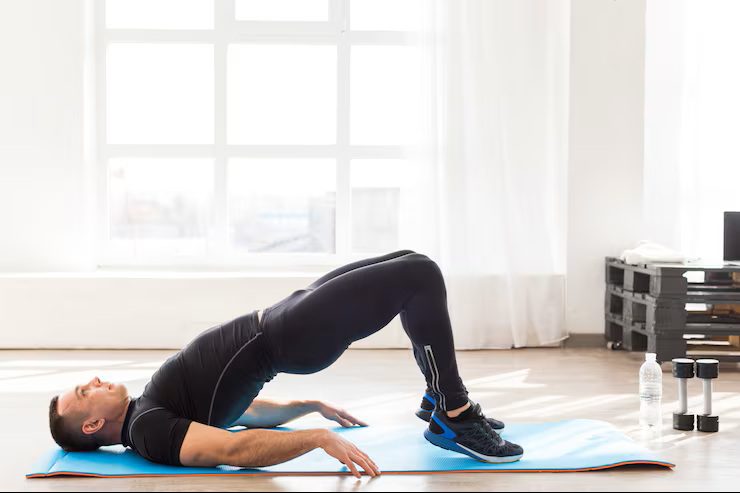
Pelvic floor exercises (PFMT) can make labour smoother by shortening active labour and lowering the risk of birth trauma. Practicing PFMT from around week 20 of pregnancy is recommended (Sobhgol et al., 2020, 2022; NICE, 2021). A women’s health physio will instruct you in the correct way to perform these exercises as well as how often to perform these to give you the most benefit.
Perineal massage is another helpful tool. The perineum is the area between the vagina and rectal region. Massaging into this area will help stretch tissues and increase its mobility. Done in the weeks before delivery, it can reduce perineal trauma, shorten labour, and ease postnatal perineal discomfort (Abdelhakim et al., 2020).
This technique can be taught to both you and your partner!
—
Takeaway
By combining education, exercise, pelvic floor training, and perineal massage, you can support your body, protect your pelvic floor, and increase your chances of a positive birth experience. A women’s health physio can walk you through your pregnancy journey to assist in decreasing hardship on your body during birth. Small steps now can make a big difference later!
Reference
Abdelhakim, A. M., Eldesouky, E., Elmagd, I. A., Mohammed, A., Farag, E. A., Mohammed, A. E., Hamam,
K. M., Hussein, A. S., Ali, A. S., Keshta, N. H. A., Hamza, M., Samy, A., & Abdel-Latif, A. A. (2020).
Antenatal perineal massage benefits in reducing perineal trauma and postpartum morbidities: A systematic
review and meta-analysis of randomized controlled trials. International Urogynecology Journal, 31(9), 1735–
1745. https://doi.org/10.1007/s00192-020-04302-8
Johnson, K. T., Williams, P. G., & Hill, A. J. (2022). The importance of information: prenatal education
surrounding birth-related pelvic floor trauma mitigates symptom-related distress. The Journal of Women’s &
Pelvic Health Physical Therapy, 46(2), 62-72. http://doi.org/10.1097/JWH.0000000000000229
Melzer, K., Schutz, Y., Boulvain, M., & Kayser, B. (2010). Physical activity and pregnancy: cardiovascular
adaptations, recommendations and pregnancy outcomes. Sports Medicine, 40(6), 493-507.
http://doi.org/10.2165/11532290-000000000-00000
National Institute for Health and Care Excellence. (2021). Pelvic floor dysfunction: Prevention and non-surgical
management (NICE guideline NG210). https://www.nice.org.uk/guidance/ng210
Sobhgol, S., Smith, C., Dahlen, H. (2020). The effect of antenatal pelvic floor muscle exercises on labour and
birth outcomes: a systematic review and meta-analysis. Int Urogynecol J. 31(11), 2189-2203.
http://doi.org/10.1007/s00192-020-04298-1
Sobhgol, S., Smith, C., Thomson, R., Dahlen, H. (2022). The effect of antenatal pelvic floor muscle exercise on
sexual function and labour and birth outcomes: A randomised controlled trial. Women Birth. Nov; 35(6), e607-
e614. http://doi.org/10.1016/j.wombi.2022.02.009